Skip to content

Emergency lighting

When the power goes out, the way out should stay clear.

We design, install and test emergency lighting so people can find their way when normal lighting fails, and so you have clear records showing it has received the attention it needs.

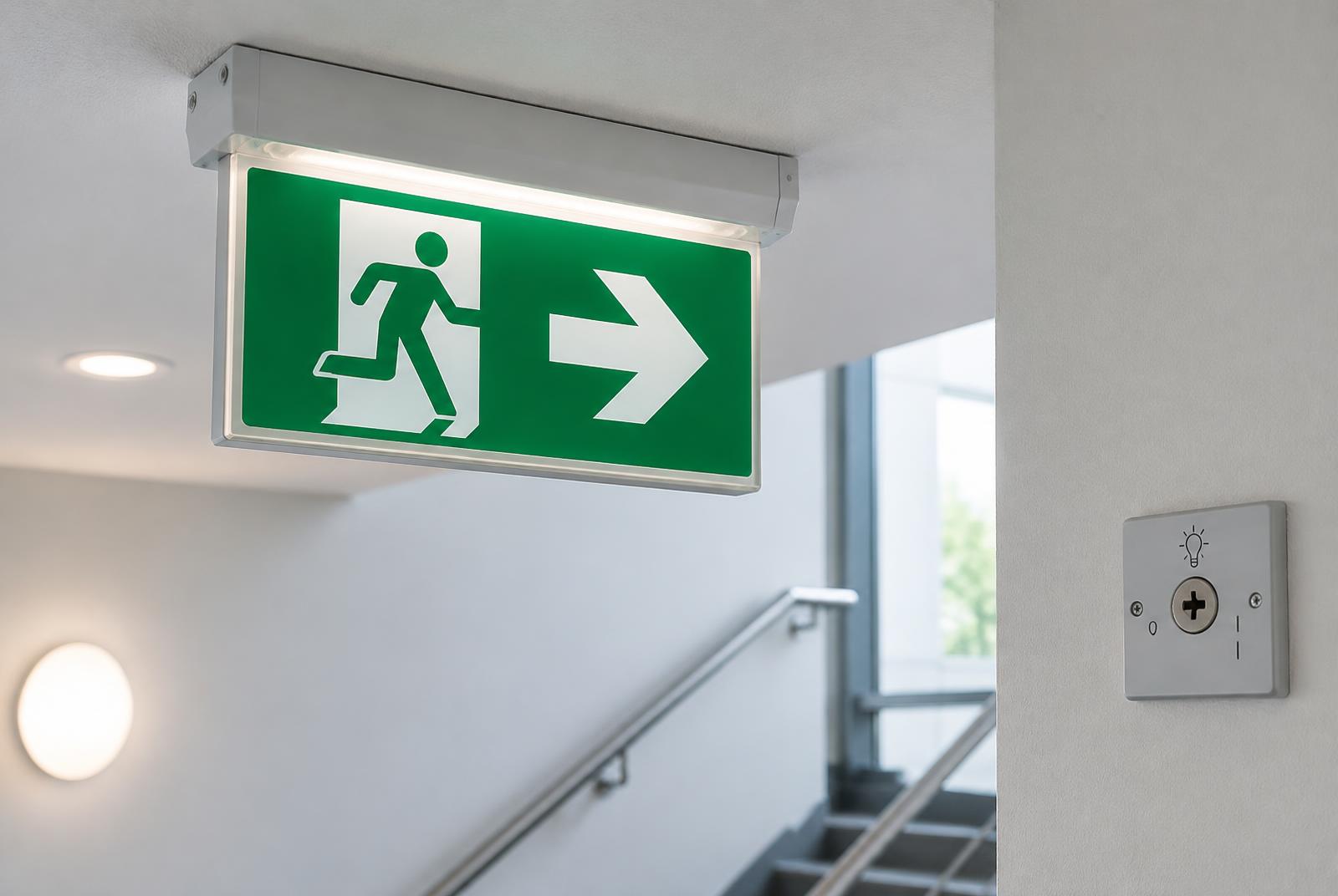
Illuminated green exit sign above a stairwell, with a wall-mounted emergency lighting test key switch beside it

Chapter 1 · Survey and design

Lighting designed for the journey to safety

Emergency lighting must help people find their way when normal lighting fails. Atlantic Fire Systems considers the route people will take, the places where they could stumble or become disorientated, and the equipment they may need to locate.

Our emergency-lighting work is carried out by qualified electricians. We bring electrical competence together with an understanding of emergency illumination and the building’s evacuation arrangements.
The right light in the right place

We review escape routes, stairs, changes of level and direction, exits, open areas and relevant safety equipment. Mounting height, fitting spacing, obstructions, output and battery duration influence the design. We consider exit signs and illumination around call points, firefighting equipment and other locations required by the applicable design standards.

Suitable photometric information and calculations support fitting selection and coverage. The design follows BS 5266-1 and the relevant emergency-lighting standards, including BS EN 1838 where applicable. Existing layouts are assessed for alterations that may have left gaps in protection.

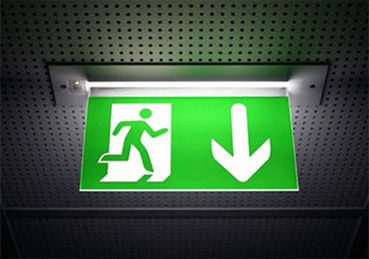
Illuminated running-man exit sign with a downward arrow
Exit signs, changes of direction and stairs all shape where fittings go.
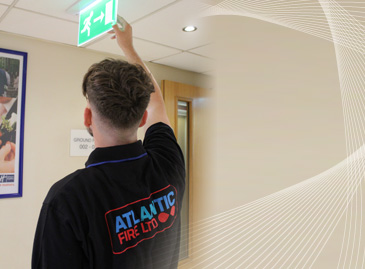
Person reaching towards an illuminated exit fitting on a ceiling

Chapter 2 · Installation

Installation

We supply and fit appropriate maintained or non-maintained luminaires, signs, test facilities and associated wiring. We check the electrical installation and operation under simulated supply failure, document the work and explain the arrangements for future tests.

Maintained fittings
Lit during normal use and continue to operate when the normal supply fails.
Non-maintained fittings
Light only when the normal lighting supply fails.

Chapter 3 · Testing, records and follow-up

Monthly and annual testing

Our maintenance can include monthly functional tests and the annual full rated-duration test. These are different activities:

Monthly functional test

A short check that each fitting and sign switches to emergency operation.

Annual full rated-duration test

Fittings run on battery for the system’s full rated duration to confirm they last as designed.

We inspect fittings and diffusers, look for damage or obstruction, check charging indicators and assess battery performance. Failed fittings and batteries are reported for repair or replacement, with the work and subsequent checks recorded.

A programme that respects the building

Duration tests are planned around occupancy and the time needed for batteries to recharge. We discuss any temporary reduction in protection with the responsible person.

You receive test results, defect information and updates to your records. The purpose is practical: lighting that supports the planned escape route and evidence that it has received the attention it needs.

Request an emergency-lighting survey or testing programme

Request a lighting survey